Atomic Monkey
-
Posts
381 -
Joined
-
Last visited
Content Type
Profiles
Forums
Events
Gallery
Store
Everything posted by Atomic Monkey
-
Which is better 40:1 or 32:1 and why
Atomic Monkey replied to yamaha_4_life's topic in General Banshee Discussion
I run API TC or JT4 at 32:1 when its hot, and 40:1 when its not. For winter I rejet and go back to 32:1. I went with API TC because its made to work in a broader temp range, it will handle heat better. I try to stick with 32:1 because it seems to leave a heavier oil film. This helps seal the rings, lube the bearings, and keeps carbon from building up. I go to 40:1 for cool weather just because I know technically I'm offsetting the mix to get more fuel. The other part is I know the engine isn't going to be running as hot so I'm not as worried about burning off the oil film. For cold weather its back to 32:1 for extra protection. The pistons are the first parts to absorb heat and start expanding before the cylinders. I'm always careful about allowing things to warm up before running hard. That's my .02 and the reasons for it. -
I had the same jetting, and the bog went away when I got down to about a 1/2 turn out on the needle. That also means the pilot needs to be bigger.
-
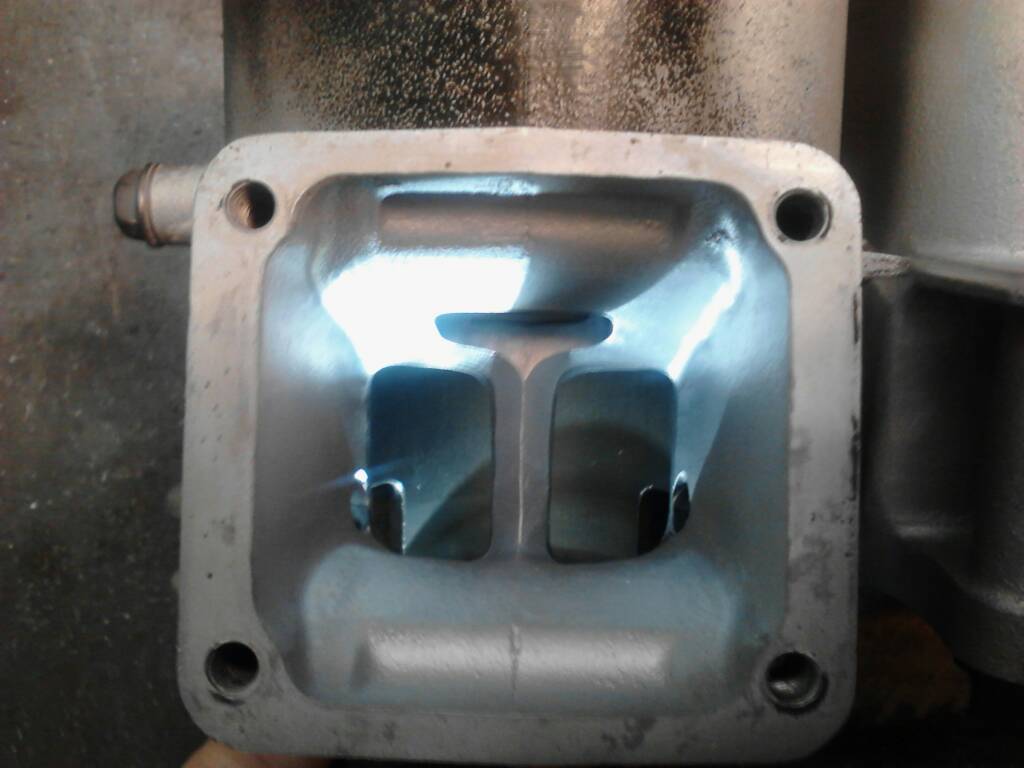
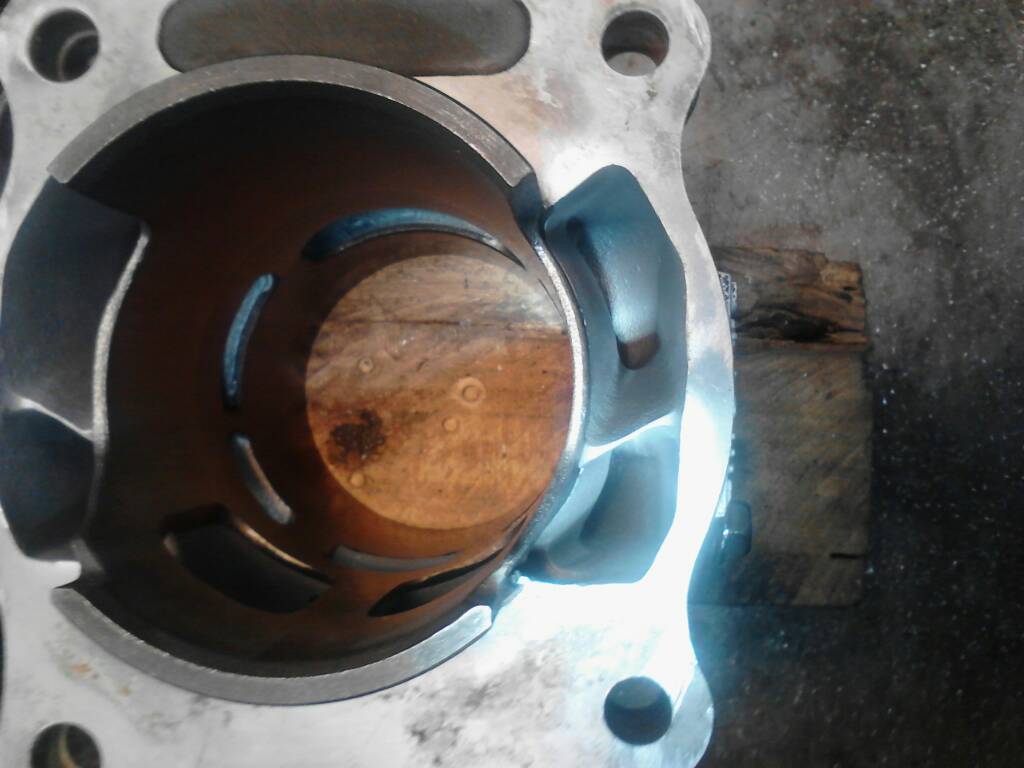
tfaith08, thank you so much for the input! I'm going to give it a go to do like Russell Wealthall said, and you seconded, to work the outside walls a bit. I'm doing it in an effort to concentrate the flow towards the back of the cylinder. I'm not as concerned about the primaries. To me the primaries are pointed in a good direction, and the choke point there helps direct the flow by creating a low pressure area... like you said, remove material from the front. I'm going to do that to give a contour instead of a straight line up the front of the primaries. My area of concern is the secondaries... I plan to remove the most material from the outside wall closer to the divider. I'm also thinking about about splitting the timing, and raising just the back of port on the boost side. In the area where the flow exits the cylinder is the area where I'm thinking most about adding epoxy. I'm worried about removing too much liner to straighten the kicker. I've been removing material from the back of the divider to reaim the flow back towards the center over the boost port. Between staggering the ports, and reaiming the secondaries, I'm hoping to use the boost port to "kick" the secondary flow around the top of the chamber.
-
I'll have to take a look at that when I get to work tomarrow. I was worried about getting too thin so I really didn't touch it.
-
Long rod 4mil vs. stock rod 4mil
Atomic Monkey replied to Atomic Monkey's topic in Banshee Repairs and Mods
The crank looks good, no extra slop or rough spots when spun. I'm pretty certain it was the head gasket leaking that washed down the cylinder... the exhaust was nice and clean, and there was coolant in the pipe. I have a different thread going on the porting, and am close to being finishing.The cases are also getting split to take a look at the trans... having some problems upshifting in the higher RPMs. And yes Starwriter, I am that guy... gave up on that 795 idea. Kept getting conflicting info, and I know the stock offset works. But I'm still thinking the 795 would put me -3mm below deck and the -7mm on the bottom. Not sure if there would be an interference problem with the crank. Be good to see if its possible... I'm still curious. Since I need the cylinders bored, I've started calling around, because I also want the porting I've done checked and/or touched up. This latest deal with the crank was brought up by a builder because he's not as familiar with the short-rod setup. The way it was explained, it would just be easier to setup around a long-rod crank. I can't justify spending the $$$ just to make it easier, so I was asking to see if there are any other major benefits. If I stick with the short-rod, he wants the whole engine, and there goes the time I want to spend digging through the trans while the cylinders are out. -
Long rod 4mil vs. stock rod 4mil
Atomic Monkey replied to Atomic Monkey's topic in Banshee Repairs and Mods
If I didn't already have the short rod crank, I wouldn't buy one. Although the the available piston sizes for the long-rod are somewhat discouraging. I thought the post about the rod ratios was great, and it's what helped me make up my mind. I made a trade and thats how I got this quad, otherwise I've always riden dirtbikes. It came with the Short-rod in it, and I don't know how long it was run before I got it, but I know there's at least one good season on it. There's a few months on the ice, a summer where we put hundreds of miles on, and quite a few field beats. The head gasket leaked, and one of the pistons melted to the cylinder last December. Neither cylinder has a ridge at the top, and the cross-hatch is still visible in the good cylinder. For now I'm just going to stick with the crank I have. When it breaks, I'll put the money into even more stroke. Sheerider... its probably a difference in riding styles. I'm riding with all 4 pokes, and mostly idling down the trails. One guy got rid of his Banshee for a 450R and regrets it. The other group I ride with, one of the guys just picked up a Banshee... so at least now I'll have someone to race to the gas stations! -
Long rod 4mil vs. stock rod 4mil
Atomic Monkey replied to Atomic Monkey's topic in Banshee Repairs and Mods
Thanks, that is great info there! -
Opinions wanted! Is there a big enough difference between the two that it justifies spending the $$$ on a long rod 4mil if you already have a stock rod 4mil?
-
I prefer to have it done right, over bragging rights.
-
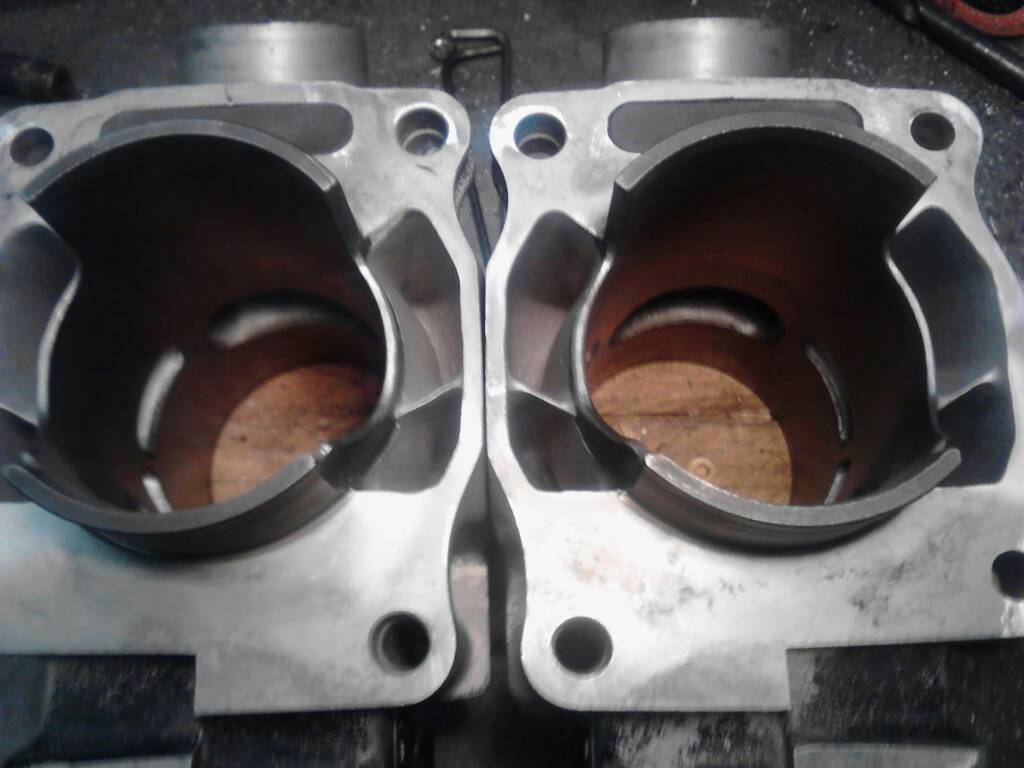
There's still work to be done. I do want to go back through and radius some of the edges, and rough-in the port heights so the tunnels into the cylinders are done before being bored. The exhaust hasn't been touched yet, so that will hopefully happen this weekend. Tomarrow I'm going to call F.A.S.T. and see about having them do the boring, and possibly touch-up the porting. The top of the cyls need to be "dusted", and domes need to made as well. While the cylinders are out, the cases need to be split. There is a problem with shifting up in higher RPMs. It would be nice to be able to get neutral while the bike's running too. Then when the cylinders come back, they'll get matched to the to the case. I want to get this thing running soon! Been at this off and on since December. But the hill climbs are coming up, and I haven't even fired up the WR yet. Thanks for all the help and positive comments!
-
Shit! Where was this 2 months ago... I just bought mine for $1500, and that put mine to shame... lol, but mine came with a "Police Interceptor" badge! I'll sell this to pony-up and get that!
-
Lol! Right! But that crusty thing shouldn't really affect the field. The first thing I looked at was how far the pickup is from the trigger... the "eye mic" says over .040. The next check... since I really don't want to pull the flywheel at the moment... is the key.
-
Just in.... Banshee w/ no spark after being left outside, owner installed new stator. That's all I got. Inspection shows a rewrapped harness, the stator is a single output on an adjustable plate set @ +2. Trinity 2 into 1, no tors.... let the fun begin!
-
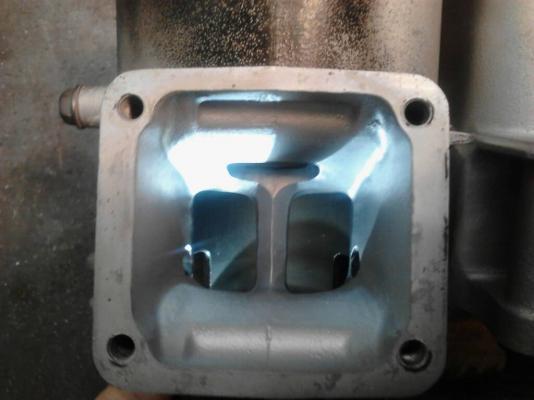
I biased the transfer flow towards the primarys. The secondarys are actually a little bit undercut in relation to the divider, and are angled more toward the boost port. I opened up the "Boyesen" ports as a little more to use them to help "charge" the secondary transfers. The plan is to stagger the port timings, and to depend on mostly using the primaries to charge the cylinder. The primary roof angles are going to be made to match the angle of the piston crown, pointing toward the boost port. The secondary angles are going to drive the charge at the spark plug. I'm hoping this is the right approach! If there's something I could do better, or if I'm going the wrong way, please let me know!
-
Yeah, just doing the tunnels was tough without catching the bit at the bottom. The Foredom grinder is what worked the best. Thinking about picking up the 90* tool for it to finish the turns into the cylinders. I don't think I want to even bother with the air grinder.
-
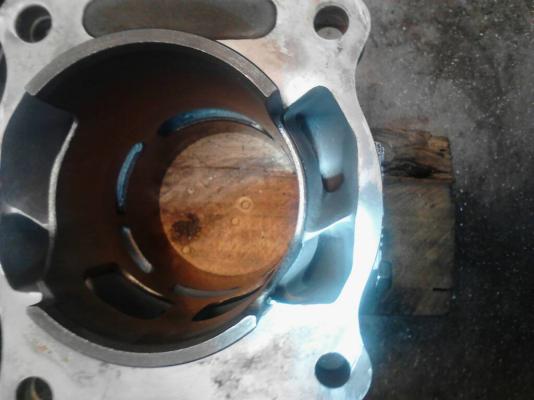
Tried to get some light in there for this pic
-
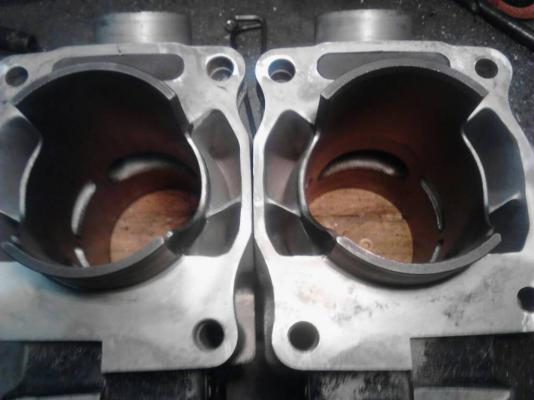
Got some updated pics, worked on the transfer tunnels tonight
-
I see the logic in that, but that's what reeds are for. I've seen 2 strokes that open directly from the intake area to the transfers. Those engines also didn't have windows in the pistons.
-
I'm going to do it then, at least make them as wide as the port... possibly even add the boost port opening to the piston. I hogged a lot of material out of the intake, so it might not be such a good idea to make them the same overall size of the port. I also added some small "Boyesen" ports, but without more welding, I don't see where they'll be big enough to make much difference.
-
Is there anything to be gained by opening up the windows in the pistons? I also see pistons with an added window for the boost port, not sure what there is to be gained from that either??? It would be interesting to see some dyno numbers to show the differences... if any
-
Two seperate leads bro... straight from that new (floated) ground to your (-) on your buffer
-
My solution was to upgrade to a different stator with 2 outputs. I have 1 a\c circuit that runs the headlights (100 watts circuit potential), and 1 circuit that is floated for d\c. From my research the d\c circuit will provide somewhere around 70 watts safely. It will charge a battery, run some LEDs, and maybe some future electronics such as an EGT, and a cell charger for sure!
-
I run an LED taillight off the a\c circuit no problem. If you change to d\c you'll have to isolate all the circuits (run seperate grounds), add the rectifier and a buffer such as a capacitor or battery to absorb surges. D\C will cut you wattage a bit because some of it gets burned off as heat in the conversion process.
-
Here's the link http://www.ccspecialtytool.com/extended-length-carbide-burrs-18-inch-3-inch-shank-length I went with the "R" shape because its the shape I used most on the 1/4" grinder.
-
Just got the carbides with longer shanks I needed to get into the transfers today. I wish there was a way to do some filling that didn't involve epoxy, I always worry about that stuff falling out.