
SlowerThanYou
-
Posts
2,158 -
Joined
-
Last visited
-
Days Won
10
Content Type
Profiles
Forums
Events
Gallery
Store
Everything posted by SlowerThanYou
-
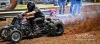
I'm going to repost our 1st three runs from our Nov. 2011 Dome Valley trip. This was our 1st attempt at 300' sand. Like I said before, we had the 60's worked out pretty good. We were having problems hooking up in 3rd & 4th gear. These our the 1st 3 runs & we were in the right lane. We did well that trip & got 2nd place in 0-465 limited, semi finals in bracket and did well in the 0-650 unlimited class. We made some changes for the better for this past weekend race. The biggest change being the 22x11x8, 14 paddle Rippers.
-
It's a Chuck Wilburn Multi-Stage. We have done a lot of R & D on clutch components, machining, coatings, cryo, maintenance/inspections and different materials to name a few things. While most of this was done with around 800 runs on asphalt. We also used it for testing sand hill shooting with around 80 runs. The most recent of the testing has been on 300' sand with about 25 runs. We are going back to the 300' @ Dome Valley, AZ. next weekend. Plus, we are planning to run Bakersfield, CA. the end of Feb. You know me as 1700camaro, does that answer your question.
-
The old clutch lever pull deal. I have a good Puerto Rico friend that said the same basic thing. He pulled the clutch lever on a few quads at the PS Gilbert, LA. race. He was surprised at how easy they pulled. I'm sure you could use a spring scale to measure the clutch lever pull. IMO that would add in another factor of the clutch cable condition. Anyway, you have an easy clutch lever. That leads to the next subject of arm weights. There are many different ways of doing the arm weights. We choose to cut the majority of the weight and then use washers to fine tune the total weight.
-
They cracked at the mounts on the pipes, but we had them hard mounted. We reinforced the area around the cracks & have had no problems since. Just for info, they should be run with a rubber dampner at the foot peg.
-
What information aree you looking for on the Wicked Motorsports pipes. We run the big bore oof on the asphalt, hill & 300'.
-
I'll do better than that, how about a Hayabusa. That was our quad, now if you don't believe it. Well there's a second video with the same results.
-
Stay tuned on the lockout/lock-up thread. I'm trying to cover what was moved & trying to update it also with new information. It will not provide all the answers, not that I have them all.
-
When we started asphalt racing in 2005. I think our 1st clutch lasted 4 passes. It took us about 4 years to really get comfortable tuning the clutch. Now with 800-900 passes under our belt. Our clutch frictions last 100 runs or more. About the only way I will recommend a clutch baseline set-up. Is to a friends set-up that I know well & I prefer to be at the track when they start testing.
-
I like most of your post, but I'm not sure if I totally understand your asphalt analogy? IMO, I also believe the clutch is very important on sand.
-
This is the earliest information I found on clutch tuning. While it doesn't get into specifics, it covers applications pretty good. How does this apply to us? It uses the priciples of primary clutch pressure & centrifugal force. The same as our quads with lock-ups. For technical support call 619-422-1191 (7am to 5pm PST) • 24 hour fax: 619-422-9067 • www.crower.com 181 CROWER CLUTCHES Since their inception in 1966, Crower clutches have been regarded as the ultimate solution to high horsepower, high torque, power to ground control. There is no other clutch available on the market that can harness the extreme power output of a competition engine and control it as accurately and consistently as a genuine Crower clutch. Our ongoing trackside research and development program insures you of the latest and most innovative components available. THE “CROWERGLIDE” The most copied clutch in racing, the original “Crowerglide” incorporates a completely centrifugal design and is totally adjustable. It was the industries first real slipper clutch, which is why it is so prevalent in racing today. Available in two through five disc setups, in your choice of six or twelve stand configurations to fit most engine/transmission combinations. Features include fully CNC machined 7075T6 billet aluminum pressure plate assembly, including stall speed springs and counterweights. Adjustable stands come standard on all units except the 8" mini “Crowerglide.” Available in 8", 10", 10.7", 11" and 12" models to compliment just about any application. All units are shipped complete with flywheel bolts, washers, one pilot bearing, feeler gauges, additional counterweights and instructions. All “Crowerglide” clutches and related components are fully S.F.I. certified. POPULAR APPLICATIONS • Truck and Tractor Pulling • Drag Racing • Sand Drags • Monster Trucks • Mud Racing HOW TO ORDER A “CROWERGLIDE” Due to the variety of applications and amount of variables involved in building a clutch that will function properly in a given vehicle, call Crower’s Clutch Department at 619-424-6758 for personalized support or fax the following information to 619-424-7129. • Engine make • Application or class of competition • Estimated rpm power range • Transmission spline info (O.D. and number of teeth) 11" DIESEL GLIDE 10.7" TITANIUM GLIDE 11" 12 STAND GLIDE Centrifugal CrowerGlides clutches CROWER PEDAL CLUTCHES Unlike the completely centrifugal “Crowerglide,” the Crower pedal clutch offers the conventional style foot control launch combined with centrifugal assistance and static spring adjustment. This highly versatile Crower clutch is available in a vast assortment of centrifugal lever and static spring combinations to cover a wide variety of applications and is available without a starter gear for blower start engines. Standard features include full 7075T6 construction, titanium adjusting stands and dial indicator for setting the pressure plate height. All units are fully S.F.I. certified and shipped complete with flywheel bolts and washers, one pilot bearing, additional counterweights and instructions that include static spring charts and installation procedures using the dial indicator. POPULAR APPLICATIONS • Alcohol Dragster & Funny Car • Pro Stock & Pro Modified • Comp Eliminator • Sand Dragsters • 2 & 4 Wheel Truck Pullers HOW TO ORDER A PEDAL CLUTCH Due to the variety of applications and amount of variables involved in building a clutch that will function properly in a given vehicle, Crower recommends that you call our Clutch Department at 619-424-6758 for personalized service or you can fax the following information to 619-424-7129. • Engine make • Application or class of competition • Estimated rpm power range • Transmission spline info (O.D. and number of teeth) PARTS & SERVICE Crower offers complete service and repair on all Crower clutches and Crower products, as well as technical support. All clutches and components returned for service and repair will be subject to a $60.00 minimum tear-down and inspection charge. Used parts requiring machine work will be subject to a machining charge based on prevailing rate. All used parts not meeting Crower’s specifications will be replaced at the customer’s expense. 9" PRO COMP 10" PRO SPORTSMAN 10.7" TOP SPORTSMAN Pedal Clutches clutches Back to the original question of to cut a clutch spring or not. You don't have to cut a spring to get the needed results. This works for us for many different reasons. It allows us to adjust the pressure to what we want. Yes, we could have custom springs made, but that would cost $$$. Plus, the bulk of springs you would have to buy. Then we probably just cut some of them anyway. We have many different types of springs ranging from: stock Banshee, yzf450, EBC, Barnett standard/heavy, FAST Racing and probably a couple more that I forgot about. The important thing is to mix, match and sometimes leave out springs to get the desired results. Now, it has been brought up in the past using a spring tester. This is needed, along with recording the data. For us we record the pressure in lbs. & one other measurement when testing the spring. I should have taken a picture & I'll try to get one posted soon of a simple set-up. Here's our basic spring pressure tool set-up around $100. You can upgrade to a Rimac Spring tester starting around $600 and the digitals are even higher. I didn't cover everything on the springs & some of it may come out later. I think it pretty much covered the orginal posters question. Now the second question the poster had "see i just want to drop the clutch and it slip on it own just a slight bit" This started the second discussion. To slip the clutch manually or drop the clutch. We prefer to drop the clutch lever & allow our clutch tuning to do the task. We follow the trends of professional drag racers & the trends of our drag racing experience. We found around 90% of what works from our 30 years drag racing experience, works very well for our quad drag racing. I provided some of the research information I found. I kepted an open mind, used our experience, others experience and applied it to our ATV clutch for drag racing on the asphalt, hill shooting & 300' sand. So, to drop the clutch or not? I'm going to use what the vast majority of top professional clutch racers do. Drop the clutch and let the clutch tune-up do its proper task. It has worked for us & our friends very well. Is it for everyone, I'm sure it's not.
-
Baseline, Base Pressure, Arm Weight...........................!!!!!!!!!!!!!!!!!!!!!!! ****** IMO, the Baseline tune-up is the single most important step/start in setting up the lock-up. ****** It doesn't matter if you think your baseline is correct/not correct or even if it's your 1st time using/setting up the lock-up. It's a known reference to make changes from, if the change(s) don't work go back to your Baseline. If a change(s) works it becomes your new baseline! Pages 15 & 16 have the procedures/step for the Baseline. I will keep them there, but also add them to this post when I have time for easy reference.
-
No bother at all. I got around to doing something I said I could do. I provided the first 3 times slips ever run on 300' sand. I could of lied and said I ran the 3.909 on the 2nd run, but I provided the correct facts for that run. I ran a 3.997 on the 3rd run doing what I said. We both agreed I was or would be a sand underdog. Speaking of the both of us being smart guys. You simply must of overlooked the tire issue! Pretty sure I said that we went to the race last minute and I had to borrow tires ( I have no choice). I knew they were not enough tire. I even said we had traction problems down track. I have bought what I think is the correct tire. As for PS sanctioned race that was what I was trying to do. I can't help they cancelled 2 days prior. I'm planning on the Mar. race, but the same thing will probably happen. Now, I'm done with this particular thread. Lets see if we can put our differences aside. There's a lot of good information in the 2 posts that got moved. How about starting a fresh thread with the good information? I'm only going to do it if you agree to participate. I will start the thread and see if we can put the differences aside.
-
You can't even do what you say.
-
Asphalt to Sand III 300' Dome Valley, AZ.
SlowerThanYou replied to SlowerThanYou's topic in Roostin' Room
As for talking shit, many people had something to say about our set-up. You can't launch in 1st gear, you can't use a launch limiter, you can't cut clutch springs and the can nots went on. Some Naysayer's were not even on this site and some were even my friends. Now, if you are not one of the people that talked the crap to me. Then you don't have to worry about it. If it still bothers you, that's your problem.
-
You are short on your comprehension skills. I did what I said I could do & what you said I couldn't. I had 2 1/2 years recovery with no work or no racing. The 1st opportunity I got to put it on sand I did. I can't help the results didn't work in your favor. You started your own drama with this subject and now the karma is on you.
-
Asphalt to Sand III 300' Dome Valley, AZ.
SlowerThanYou replied to SlowerThanYou's topic in Roostin' Room
There was a lot of good information and it only scratched the surface in that post. I'll try & recap some of the key areas in the future. -
Fouled removed himself from his own bufoonery. So, all I have to do is address your non factual BS. Stay in your fantasy world, until a race happens. That's all it's, your fantasy.
-
It's OK for fouled to be a smart ass and use sunshine, Bob or turbo to name a few. Then I dish some smart ass back with proof, he gets his feelings hurt. I can't help fouled is wrong and giving wrong information about dumiping the clutch and go. Running my mouth in person to you or your friends. I would give the same respect as given to me. Nothing more nothing less! I gave you the same respect given to me when this & the new post was opened. Fouled decided the route he wanted to take and I returned the same. As for the drama, your the pot calling calling the kettle black. Now, are you or fouled going to provide any non drama information to either posts?
-
Asphalt to Sand III 300' Dome Valley, AZ.
SlowerThanYou replied to SlowerThanYou's topic in Roostin' Room
It's pretty simple, If I did what I was told by the so called experts on 300'. I wouldn't not have been able to do what I accomplished. Now, if I'm talking shit by providing the proof. So....... be it! -
OK Queenee, You continue to spew BS out of your keyboard. So, I take your advice in your quote to slow down my 60'. Now, lets use dajogejr's old set-up. That's what I used incomparison to get a baseline on what I should or shouldn't be able to run. Again, I guess I need to take your wrong advice & continue to "dump the clutch and go". People can use the majority of information in this post or they can chose not too.
-
I'll take dumping the clutch any time. I adjust the clutch set-up to different track conditions. That's the difference between a low 1.4 60' and a low 1.3 60'. This post is old and was brought back up for a reason. It took well over 2 years for my accident recovery. I came back & did what I said I could do. Now, if you don't like it. Go suck on a tea bag.
-
Asphalt to Sand III 300' Dome Valley, AZ.
SlowerThanYou replied to SlowerThanYou's topic in Roostin' Room
There's a few things you have not figured out in 3 years. There's a big difference between low 1.4s & low 1.3s 60's. Also, low 1.3s is not typical for a 443 Cub on a bar & it's on race gas. I'm not really worried about it. It took well over 2 years for my accident recovery. I came back & did what I said I could do. Now, if you don't like it. Go suck on a tea bag. -
Did you read the lock out tuning thread? It will answer most of your questions. As for lock-up weights you can use washers & even an extra nut if there's room. We cut our own using brass or steel, then fine tune with small amounts of washers.
-
I see you added to your post since I replied. The wilburn is a very good set-up & I have been working with standard lock-ups with great success also. Our orginal hill shooting sand set-up (2009) worked very well, but I knew we had too much wheel speed on the launch. After my accident we went back to asphalt racing. Nov. 11 we decided to run 300' sand for the first time. I knew from our previous clutch data we had too much base pressure for sand. Before going to Dome Valley, I made clutch adjustments based on that. Plus, we didn't have enough tire. We lowered the base pressure & did a gearing change to compensate. 300' sand base pressure was a # that have used on asphalt, but it was on the high side of what we prefer for most conditions. The arm weights & tower springs were unchanged from our optimum asphalt set-up. As for the rest of the clutch set-up it remained unchanged also. As for the gearing, we used 16/42 (2.56) on the hill and changed to 17/42 (2.47) with a 1st gear launch and a 2.86 primary.
-
It's nice you responded with an informational post. Now, if you don't think a 443 cub on race gas, stock frame with a 210lb. rider pulling low 1.30 60's is not impressive. Well, whom am I to debate it with you.