SlowerThanYou
-
Posts
2,159 -
Joined
-
Last visited
-
Days Won
10
Content Type
Profiles
Forums
Events
Gallery
Store
Everything posted by SlowerThanYou
-
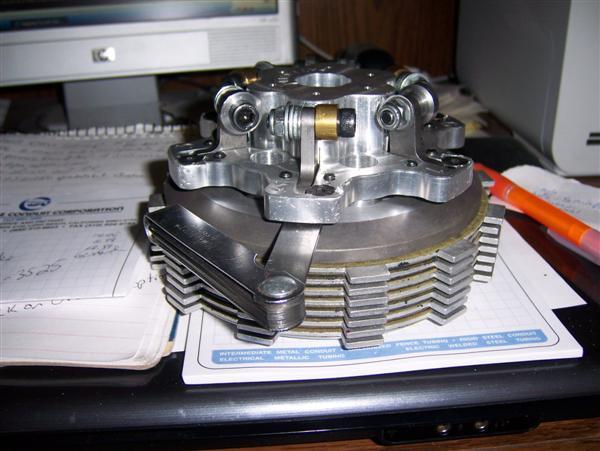
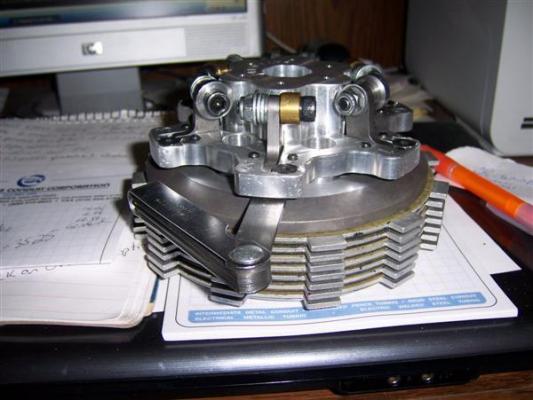
Here's how we measure our arm air gap. It's basically the same way you guys can measure yours, but you have to make sure your arms a parrallel to the pressure plate.
-
I thought a similar question was asked a while ago about the same subject. First, you need a minimum clearance this is usually around .100". If you don't have the min. clearance your clutch will not disengage when the clutch lever is pulled in. Maximum clearance, I wouldn't stray to far from your min. clearance! Maybe .020-.040 max. If the max clearance is too much. The arms will not apply enough pressure to lock-up the clutch. IMO, worry about the basics above. We actually change our arm air gap with the clutch stack hieght & machining of clutch components. I consider this stuff for very fine clutch tuning. We have 2 settings we shoot for depending on the class of racing we are doing. Other than that, it's just something that's checked during maintenance/inspection.
-
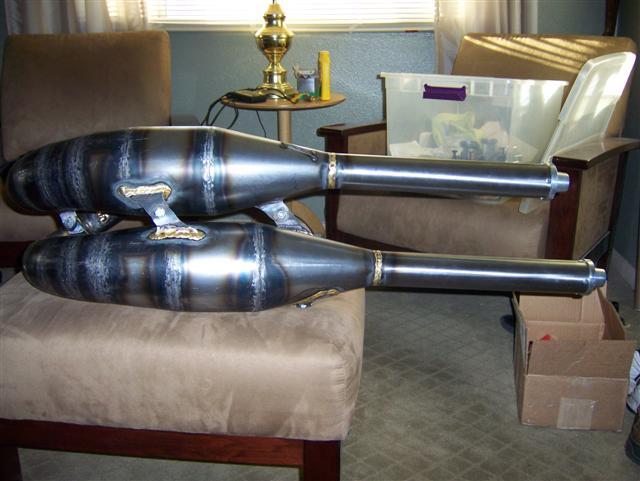
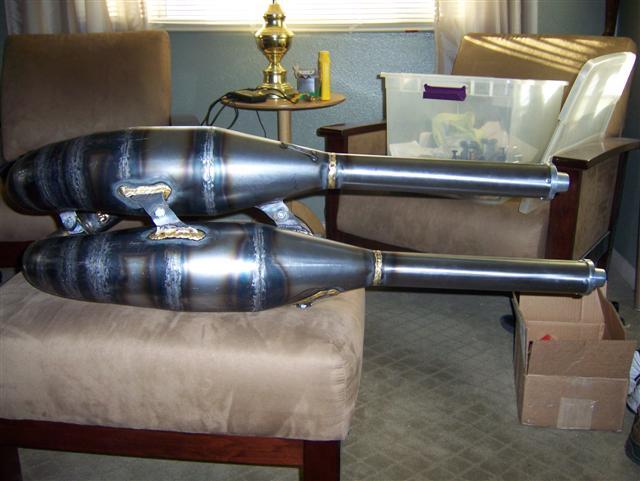
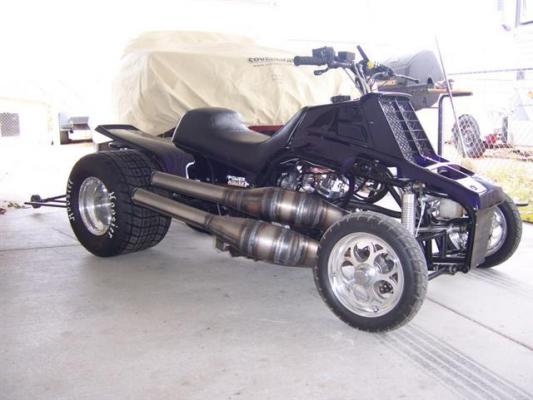
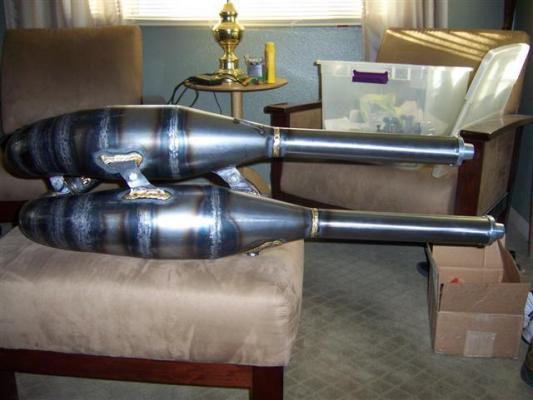
The 1st pic is the Shearer's, the 2nd is the Power Pros.
-
I've ran the Power Pros & they are a great high rpm pipe. I just bought a set of Shearer's both of them have the integrated silencers.
-
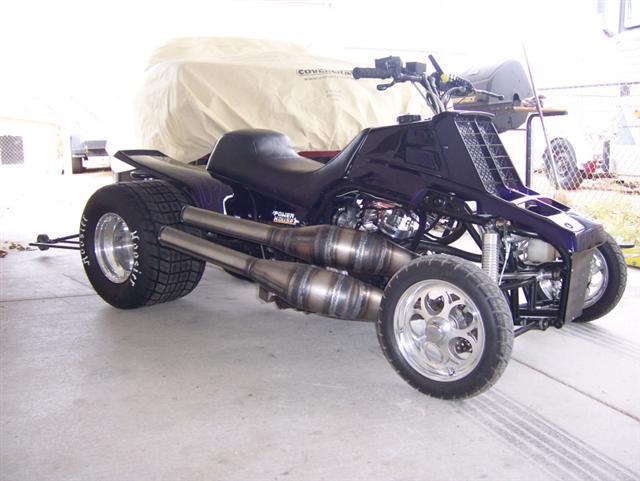
This was my choice.
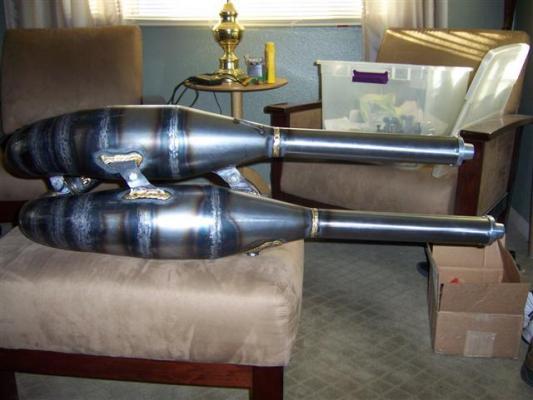
-
Hopefully these 2 videos work. I got the idea from another thread in the video section. I was not able to get the link to work there. These are some old 1/4 mile videos with our stock cylinders. We were still learning the clutch set-up. You should be able to pick-up on the difference in clutch settings between the 2 vids. Ask questions or make comments. http://s143.photobucket.com/albums/r143/BLK1700/Clutch%20Tuning%20Video/?action=view¤t=93006012.mp4
-
Using 5th & 6th gears for 1/8 & 1/4.
-
Bigboy is giving out some good advice, but I'm going to give a different perspective to both of his posts. We only use 1-4 in the 300' & we are well into the top of 4th gear before the finish line. We do the same thing when running 1/8 mile & 1/4 mile. We use a 1st gear launch and shift around the 60' mark. It works for us with a low 1.30 60' with a stock frame, small gas motor & 210+ rider. Two different ways to attack the situation.
-
Thanks Wheelman, You beat me to the punch. I had it planned that way to drag you back into the thread. LOL! It's really nice having a drag racing background with other motorsports vehicles. It really helps with ATV drag racing. I'm always saying, research & learn from other motorsports. Most of the information applies to the drag quad. Just to tag along with what Chris has already said. It's useful to use different color lights to supplement the shift light for data. Our ignition allows us to trigger 3 or 4 different devices. Plus, we have a shift kill/counter, that can be used for some options also.
-
This is just my opinion based from my drag racing experience. I'm sure the above automotive top drag cars got their basic clutch experience without data logging. Clutch tuning for ATV drad racing is still in its infant stages. My self included, with 8 years experience. IMO, LOL! Clutch tuning & data logging like the top drag cars/teams. Will, deffinitely be shitting into the wind for the majority of ATV Racer's! Data logging has it's place & I'm trying to save you a little money, time & aggravation. There's a lot more information/data & incrimental times that the top teams use. There's a vast difference between 1/8 & 1/4 mile motorsports vs. 300' ATVs. Learn basic drag clutch tuning & basic data logging. That's a great place to start, good luck. You don't have to spend $1500 to data log. A simple adjustable shift light when used right can give a lot of information. We use other simple things to data log our information also.
-
I'm not going to explain everything to make this work. The gearing might be a little off, but that's the way we would gear for quickest ET. Our background is NHRA drag racing for about 30 years. You will find, MOST heads-up & record setting racer's. Will gear their vehicles so they are hanging there lungs out well before the finish line. We follow the same approach with our asphalt ATV & even use it for 300' sand. We have been very lucky to have our drag racing background help us with our ATV set-up.
-
I was sensing this was something you wanted to discuss a little bit. I agree, base pressure will not by affected by launch rpm. Changing launch rpm, does have an affect on how the base pressure reacts, slips or doesn't slip. That's why we use launch limiters in our racing. As for the arm/dynamic weight it's slightly affected with launch rpm, but it primarily comes in with wheelspin/wheel speed. Here's an example of arm weight being affected by launch rpm (not good). When a launch rpm is to high for the clutch set-up. The tires will instantly spin, causing an arm spike to cause near instant lock-up of the arm/dynamic weight. Now, we haven't even addressed a couple laws of physics brought into the 1st qoute. I only know some of the basic(s) laws. Going to cover this in a later posts, hopefully!
-
Here's some clutch wisdom/experience from a good source. This type of information from other motorsports is what I try & apply to the ATV clutch system(s). There's some very good tid bits that can be picked-up from this information. There's one thing I somewhat disagree with in the information below, but I would like to hear some other's thoughts first. I know, the launch limiter subject was supposed to be next & it's still coming. It's hit on a little bit in this information. "The most sophisticated drag racing clutch systems allow controlled slippage to get maximum horsepower to the ground with minimum tire spin. These clutch systems are fully adjustable for spring and centrifugal pressure, as well as wear so that the system can be tuned for the car to meet the track conditions. Adjusting the clutch system requires the use of a data recording computer. Engine, transmission, and driveshaft RPM graph overlays indicate the amount of clutch slippage and tire spin on both the launch and subsequent gear changes that allow us to make proper tuning decisions. Without a data recorder, any tuning decision is merely a guess. The most important consideration is how the car will react to the clutch settings when the car is launched. On the launch, you want to achieve optimum wheel speed without excessive tire spin or clutch slippage. To accomplish this, the launch RPM needs to be significantly lower than the shift RPM to provide some initial slip while allowing the clutch to gradually applying additional clamp pressure as engine accelerates to the shift point. TECH TIP - LAUNCH RPM Since centrifugal assist is RPM sensitive, increasing or decreasing the launch RPM will increase or decrease the clutch pressure at launch without any actual adjustments being made. Additionally, increasing the launch RPM increases the inertia applied to the rear tires from the stored energy of the clutch system. Once the vehicle leaves the line successfully, the performance of the clutch can be evaluated on subsequent gear changes. If the vehicle tends to have no slip on the gear change, spins, or if the tires shake, reducing the counterweight will provide additional clutch slippage reducing the spin or shake. Without the data recorder, it is extremely difficult to determine exactly what is happening at these points in the run. Examining each successive gear change, we should see the slip time reduced until there is very little clutch slippage in high gear."
-
Bar hieght can be used to adjust overall set-up. We have used it from on the ground to 2" above. When we get lazy & don't want to make an adjustment elsewhere. Wheelie bar height or tire pressure are quick & eazy changes to adjust how the bike leaves. Not speaking for the owner/rider of that bike. A stock stroke cub is going to prefer a low bar height. It helps keep the wheel speed quick for a high rpm motor.
-
This is posted in the General Banshee Discussion, Under Real Builder's Race.
-
Everything in this thread is anyones choice to use or not use. Just putting that out there, I'm not upset that you asked questions. The springs are measured at there least amount of pressure for the hieght as installed. As the spring compresses, when you pull in the clutch lever. The spring pressure increases, but we don't worry about that pressure. The 100 lb gauge would probably not be enough. I'll put it this way. You are measuring each spring base lb. at the installed hieght. Then times that X 6 if that's the amount of springs being used. Example: 1 spring measures 60 lbs. at 1" installed hieght. 6 X 60= 360 lbs. I will not get into specific numbers of base pressure in this thread. Speaking from real word experience. 360 lbs of base pressure is more than enough for a 18mm DMX set-up for 300' sand. I'm sure a bigger twin & tripple could use more than that gauge could provide. I hope that answers your questions.
-
This is what started the shit/bandwagon storm in the Wannabe Builder's Race thread. Yes, I would like to see something like this happen. I don't think it will ever happen and definetely not under the terms put out by a couple delusional Poser Builder's. I think the race has its place on the dunes, but needs to be ran at the track also. Dunes sell products & so does track times/wins. Real Builder's races are happening at tracks/events throughout the year on a consistent basis. This is Builder's actually racing against each other. The fake Builder's don't understand that because they aren't doing that. That leads to the next subject dune racing. Just my opinion here, not that it matters. A real Builder's dune race is not calling other's to play in your own backyard sand box. Then, using your BS Artists rendering. We beat XXXXX Builder's XXXXX size motor by 10-15 length our whatever XXXXXX links you dream up. The question is, did you beat one Real Builder owned & tuned quad? There's a difference between racing/beating a customer's owned & tuned quad, built by XXXXXX Builder! The track thing for you two stooges will probably never happen. So, dune racing it is. Minimum you need to do is have a marked distance & some type of flagged or rubber band start. There's a couple other basic rules I would throw in also, but don't want to confuse or scare you two. The key here, HINT........HINT! Is to actually race against other Builder's owned/tuned quads with them present at a dune race.
-
We use the DGH in both our 39s & 41s on race gas.
-
Hee...hee, nope & it wouldn't matter anyway. I'll be back to lurking Wed. like i've mainly done for 6 years. Tedder still hasn't bought my membership.
-
 Yep!
Yep! -
I called this. Now, did someone ask or cry for it to be move. I'm sure we'll here the political answer.
-
You guys/gals left out the Punk Out Money! Grudge race, you don't leave home with out the Punk money locked in for someone who doesn't show.
-
You are not supposed to post in this thread. What the hell is wrong with you.
-
Nope, most drag racer's use soap or tubes.
-
Drag slicks are really leaky. We actually use two coats, letting them dry in between.