
Snopczynski
-
Posts
5,878 -
Joined
-
Last visited
-
Days Won
2
Content Type
Profiles
Forums
Events
Gallery
Store
Everything posted by Snopczynski
-
What needle is in it?
-
I find it hard to believe that if cascade did make a mistake on their end, that they did not rectify it.
-
Compression vs octane (straight race gas)
Snopczynski replied to Snopczynski's topic in Banshee Repairs and Mods
This isn't hard, I have seen a lot of guys on here answer this question with little to no info about timing, squish, etc...... Just answer off general rule of thumb for compression vs octane. :wallbash: (if you guys wanna get technical) 9,500rpm dune port motor, 0 degree timing, .045" squish, 75 degrees ambient temp, 72% humidity, 30.01 barometric pressure, at sea level, and 0 pounds of boost! Jeff (Fast) So what compression for the cutoff to go to straight race fuel. Im not worried at the point where you think the need starts for higher octane. -
Compression vs octane (straight race gas)
Snopczynski replied to Snopczynski's topic in Banshee Repairs and Mods
Jeff, So your vote is for 93 octane at 165 psi, or 110 octane at 165 psi? -
I want some replies below on where people think it is, or where they voted too. Especially from the seasoned motor guys and our resident builders like flotek, jeff from fast, Daj, Firehead, Blowit, and our buddy out in Nevada. I voted 170 psi.
-
IDEAS FOR NEW INNOVATIONS TO BE ENGINEERED/MANUFACTURED
Snopczynski replied to blowit's topic in General Banshee Discussion
Im thinking more along the lines of things like replacement aluminum fuel pickups to replace the stock plastic ones that break. CVT intake ducts that are made of aluminum and have cleanable filters. There are a lot of areas in the side by side market that have not been touched yet. All that stuff was things I had to make myself for my rhino. -
+4 timing with 91 octane?
Snopczynski replied to official_style's topic in General Banshee Discussion
it depends on compression. -
IDEAS FOR NEW INNOVATIONS TO BE ENGINEERED/MANUFACTURED
Snopczynski replied to blowit's topic in General Banshee Discussion
What about making parts for the sidexside market like the Rhino and RZR-S? -
Well I had already stated the difference of what it does from testing it on the dyno.
-
Well, they make a mid-top pipe. They dont make a drag pipe though. Were these custom made pipes?
-
That really doesn't tell us much cause you did it on a large bore single. The bigger the motor, the more difference it seems to make on the dyno. Most stuff with small bores and stock cranks showed maybe a 1-1.5 hp difference between the midrange and the topend.
-
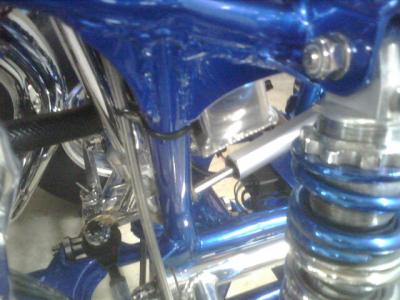
The 89' is the only one here at work to take a pic of.
-
An experienced welder can weld in an a-arm conversion and make it stronger than the factory made the frame else where . Not sure why you guys think the welds would be weak. We have 3 a-arm conversion bikes in our posse and never had a problem with them. Its nice because the j-arm front end bushings wear out fast, and the stock j-arms bend pretty easy.
-
They make a slight difference, but usually only a notable gain on a mini stroker 390cc motor or bigger. Thats according to the dyno.
-
I have never heard of dynoport drag pipes for a banshee. I know a lot about dynoport and their pipes.
-
the 2 into 1 is for low-mid setups and increses throttle response. You are running all the wrong parts (mid-top) to be running one.
-
Anyone mentioned Dan at Patriot Racing yet?
-
I feel that away about the standard clutch, but not the kevlar models.
-
poping sound at aound 1/4 throttle
Snopczynski replied to BANSH-alena-jol-EE's topic in Jetting & Exhaust Forum
Does it run well at low rpm, is the throttle crisp? Is there any sort of bog or hesitation along with the pop? -
I have had fairly good look with the barnett kevlar setups. I have seen one break the fibers, but for the most part they hold up fairly well. Some other key points are maintenance and a quality trans oil that help a clutch hold up well.
-
Carbon Tech makes low tension, mid tension, and high tension reeds. They all serve a different area of the power curve. Boyeseen reeds will increase power to some extent over the entire range, but focus mainly mid-top. The carbon tech mids will focus more on the midrange than anything else. The low tensions focus on the bottom end more than anything else. Even the boyeseen reeds use carbon fiber, so this alone does not just limit the reed. The range it serves has to do with petal thickness, the rev plates on the cage, and the reed petal cut out relief for the tabs.
-
I dont know a single person with a drag bike that runs a tusk clutch in it. I do know people with stock, and ported 350's, and even 4 mill dune bikes. I have seen those clutches come apart, discolor the plates from heat, and I have seen the bottom fiber plates break into several pieces. This is on bikes from near stock power with pipes, all the way up to 80hp. So, as I said, tusk=shit. You always get what you pay for. There is a reason you can buy it for $45.99, that reason is, its made from low grade materials. Banshees stock have an anemic clutch. It should be bigger. They hold up ok, but constant abuse takes a toll on them, hence you need to invest in quality parts. The first time one of those tusk clutches comes apart, eats a crankseal, and you have to split the cases. Then you will have wished you spent the extra money for a quality clutch kit. As for the supposed claim on the rear wheel dyno correction factors, members like firehead can backup my claims. Regarding my know it all attitude: Its hard for other people to see the emotion put behind words when they are in text format. I usually leave most of the answers on the forum for others to answer. If I see someone giving what I feel is a wrong answer by theory or personal experience, then I will pipe up and give my opinion. I am not on the other end of the computer thinking about how I can be a dick. However, if someone comes up with a post that I feel is the completely wrong direction to go in, I am going to say something about it. Last thing I want to do is give someone bad advice, or let them follow advice that can lead them to frustrastion, and downtime on a riding trip. Ultimately bad advice leads to extra money and time invested in fixing a problem. So you can follow anyones advice you like, but since when does it make sense to spend a ton of money on pipes, carbs, port work, reeds, a head, motor work, and then not spend it on the clutch? Doesn't make sense to me, makes me think "maybe there is a reason why this part costs this much and it is so popular".
-
Well the post is asking what clutch he should get, he has a full drag port and t5's. Then you say all the stuff about the tusk. So I think just about everyone read it as you trying to sell him on a tusk clutch for his bike. Rear wheel dyno numbers are not even accurate enough to give you an idea of what your hp is. Dynojet released info admitting their correction factor programs are up to 15% inaccurate. So if your bike actually read 52hp on the dyno, it could have actually been 44 hp. Hp readings on a rear wheel dyno are not rear wheel hp. It is a projected crank hp reading.
-
Is the motor ported?
-
In my mind, there is still nothing you said that would justify him putting a tusk clutch in a drag bike. Rear wheel dynos are not accurate at all, and you always get what you pay for.